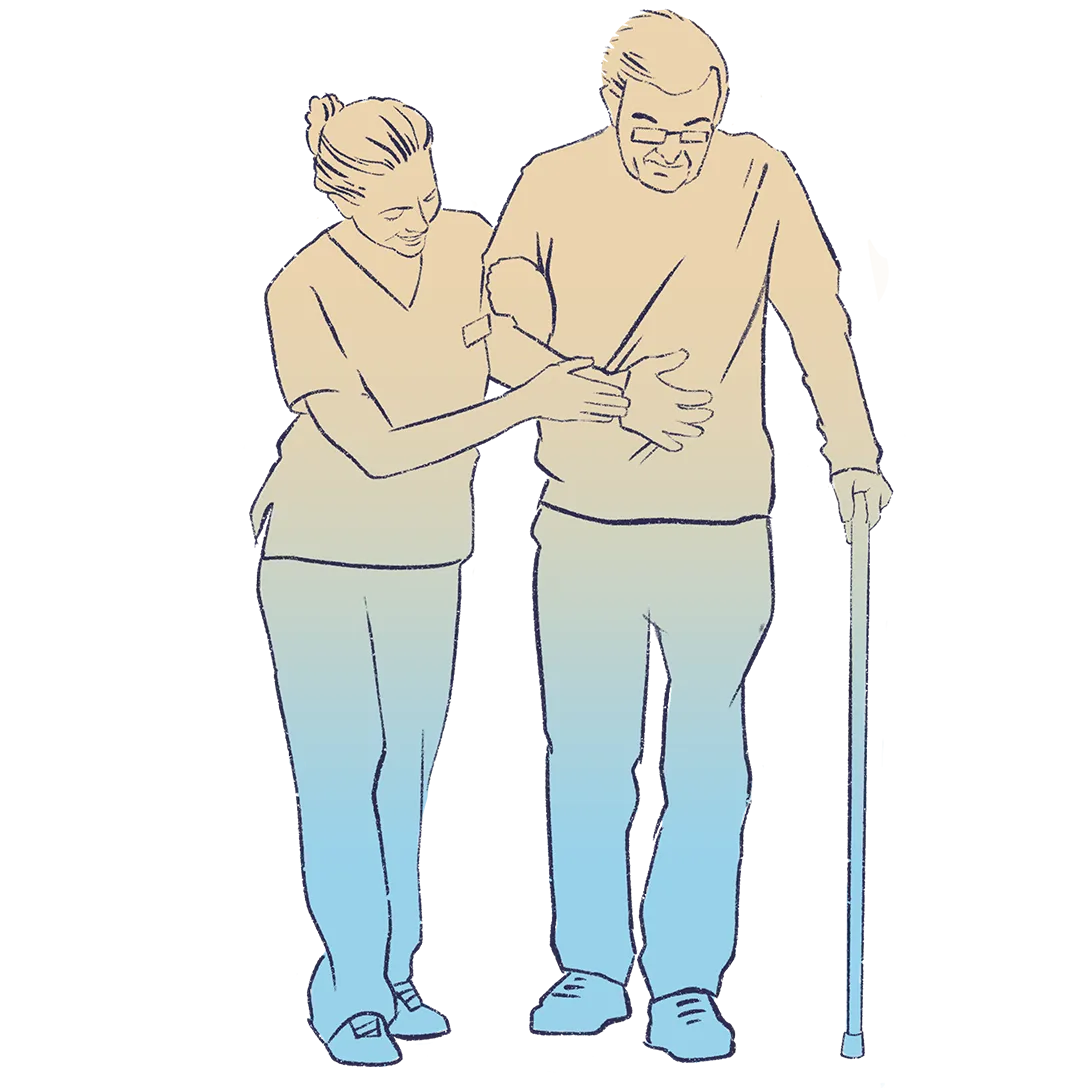
The Good Work programme, which is based on the Government Programme, aims to boost the sufficiency and availability of social welfare and healthcare personnel. One way is to recruit internationally and provide national language training for those whose first language is not Finnish or Swedish.
The internationalisation of education and training is already visible at workplaces: there are an increasing number of international students studying towards a vocational qualification or degree and persons working towards a special qualification working in the care sector. They aspire to jobs in the Finnish social welfare and healthcare sector, but many of them run into obstacles along the way. One of the main obstacles is a lack of language proficiency.
Without language, there is no safe care
In the social welfare and healthcare sector, language proficiency is not a formality, but a cornerstone of patient safety. Professionals are required to have adequate oral and written proficiency in Finnish or Swedish. Although the Finnish Supervisory Agency can verify a person’s language proficiency, the ultimate responsibility for ensuring it lies with the employer.
Many skilled international workers are left without a job or traineeship precisely because their language skills are inadequate for taking care of the work duties. There also seem to be challenges with demonstrating the required language proficiency, as there are far too few language tests organised. This is unfair to students and persons working towards a special qualification, and it is also inefficient for Finnish society.
Professional language skills are needed in the social welfare and healthcare sector
The efforts to learn the language should start in the country of origin, but integration training and work-based language training are also needed after arriving in Finland. The employer has a key role to play in this.
General language skills alone are not enough – you also need professional language skills. This requires nationally consistent models, which the Ministry of Social Affairs and Health is currently exploring. Language training should be included in both programmes leading to a vocational qualification or degree and qualification training for professionals educated abroad.
Language agreements increase willingness to recruit
Workplaces and educational institutions need operating models that lower the threshold for instructors to take on international students. One example of a functional model that supports learning is language agreements, which define the student’s starting level and goals.
Instructors need to be provided with time, training and support. The teachers and educational institutions in charge of instruction must also increase their efforts. Pairing up Finnish students with international students during traineeships could also increase learning and integration.
When will we have national language training?
Despite the difficult situation of the wellbeing services counties, we will need international labour in the long term. Therefore, the recognition of qualifications and the qualification training and licensing of professionals educated abroad must be sped up.
As part of this process, we must also develop national language training for students studying towards a vocational qualification or degree and a clear model for assessing language proficiency.