
Tehy has repeatedly highlighted the problem of workwear in early childhood education and care. This is not about offering staff a 'nice little bonus', but about providing the appropriate clothing required for the job and covering the associated costs.
Our aim is for employers to ensure that early childhood education and care professionals are provided with the appropriate clothing required for their work. If the employer does not provide workwear, the costs could, for example, be reimbursed through a clothing allowance.
Working in early childhood education and care takes its toll on clothes
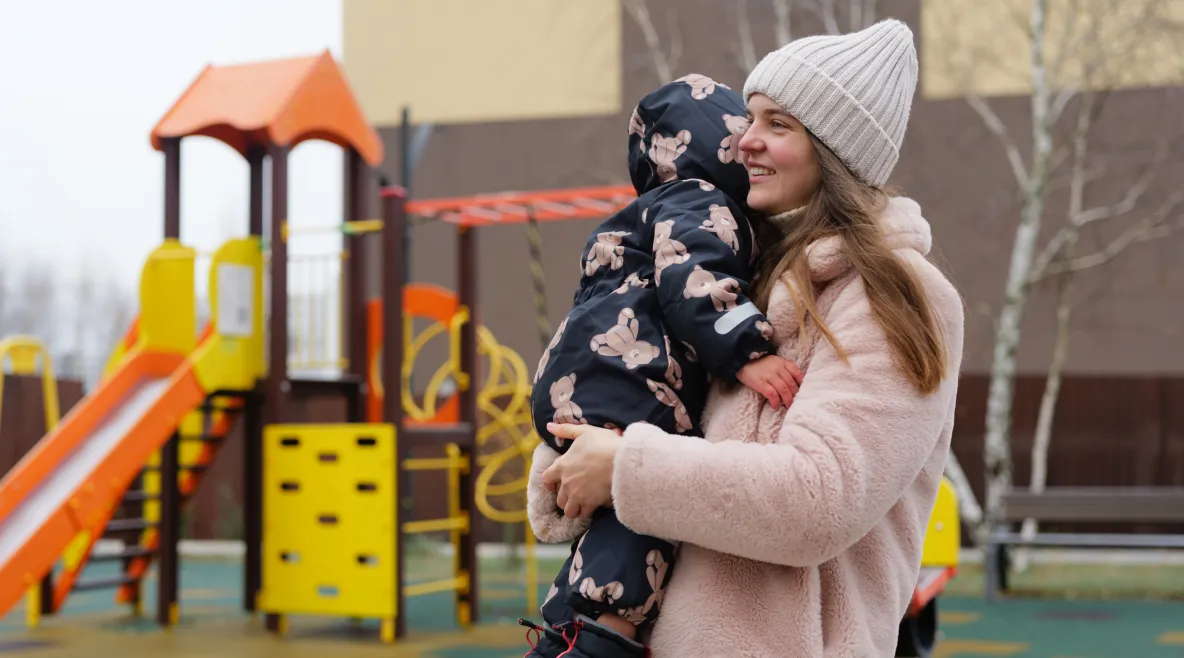
Day-to-day life in early childhood education and care is anything but a neat indoor job. A typical working day includes time spent outdoors whatever the weather, playing on the floor, doing crafts and painting, mealtimes, dressing and undressing, and looking after young children. Clothes are exposed to dirt, moisture, wear and tear, and bodily fluids.
In Finnish conditions, outdoor activities require very different clothing depending on the season. Employees need clothing and footwear suitable for rain, frost, slush and hot weather.
An employee’s own clothes and footwear inevitably suffer more wear and tear and become dirtier at work than they would during normal leisure activities, with clothes also having to be washed and replaced more often than usual.
The clothing requirements for early childhood education and care staff and the wear and tear on their clothing have been described in a previously published article in the Tehy magazine.
Why do early childhood education and care staff have to pay for their own workwear?
Current workwear practices also raise questions about the equal treatment of employees.
Early childhood education and care staff work outdoors in the same rain, freezing temperatures and slush as many other municipal employees.
Within the scope of the KVTES general collective agreement for the municipal sector, there are occupational groups in which the employer provides employees with clothing necessary for their work to protect them from dirt, cold and damp, and ensures that it is replaced. Such roles include, for example, park workers, sports ground maintenance staff and site managers.
In many female-dominated sectors, such as early childhood education and care, employees are generally required to pay for their own workwear and footwear.
Early childhood education and care staff work outdoors in the same rain, freezing temperatures and slush as many other municipal employees.
Working conditions and the costs incurred by employees must be assessed objectively. Practices that have developed over time do not, in themselves, constitute sufficient grounds for differential treatment.
There are significant differences in municipal practices
Local Government and County Employers KT and the main collective bargaining organisations agreed, for the current agreement period, to set up a temporary working group, one of whose tasks was to investigate the practices regarding workwear for early childhood education and care staff and the use of the clothing allowance.
A survey carried out in spring 2026 shows that practices vary considerably. Of the 194 employers who responded to the survey, only 27.8 per cent pay a clothing allowance, 67 per cent do not pay one at all, and 5.2 per cent have discontinued the practice. For employers who pay a clothing allowance, the average amount of the allowance is 103 euros per year.
In addition to the clothing allowance, some municipalities provide staff with, for example, workwear, rainwear, footwear or other equipment required for their work. These are good examples of how solutions can be found to the costs associated with workwear.
However, the current variation between municipalities is not satisfactory. The position of early childhood education and care professionals doing the same job can vary considerably from one municipality to another. A fairer approach would be for the employer to provide the appropriate clothing required for the job. The need for a clear and consistent approach was also highlighted in the open-ended responses to the survey.
Employees should not have to bear the cost of workwear
Appropriate workwear is not just a financial issue. It is also linked to working conditions, wellbeing at work and the sector’s ability to attract and retain staff.
The survey shows that solutions to the cost of workwear have already been found in various parts of Finland. What is needed now is a more consistent approach across the country.
Employees should not have to bear the cost of workwear.