
In joint on-call services and primary care emergency clinics, a nurse is often the first professional to assess a patient’s condition, initiate treatment and guide them in the right direction for further care. This is not just a supplementary approach, but an essential part of everyday healthcare. The healthcare system relies heavily on independent nurses’ appointments.
Independent nurses’ appointments have become an established part of the Finnish healthcare system. The skills of nurses are put to extensive use and bring significant benefits to the healthcare system. Nurses’ appointments facilitate smoother access to care and support the smooth running of the entire service chain.
With the introduction of independent practices, nurses’ job descriptions have changed significantly. The role increasingly involves clinical decision-making, minor procedures, interpreting test results and coordinating care. Patients are treated independently, and the work at the clinic resembles, in many ways, the duties that were previously the responsibility of a doctor.
The nurses who responded to the survey reported that a significant number of tasks had been transferred to them from doctors. These tasks involved both clinical procedures and the administration of medication, as well as the coordination of care.
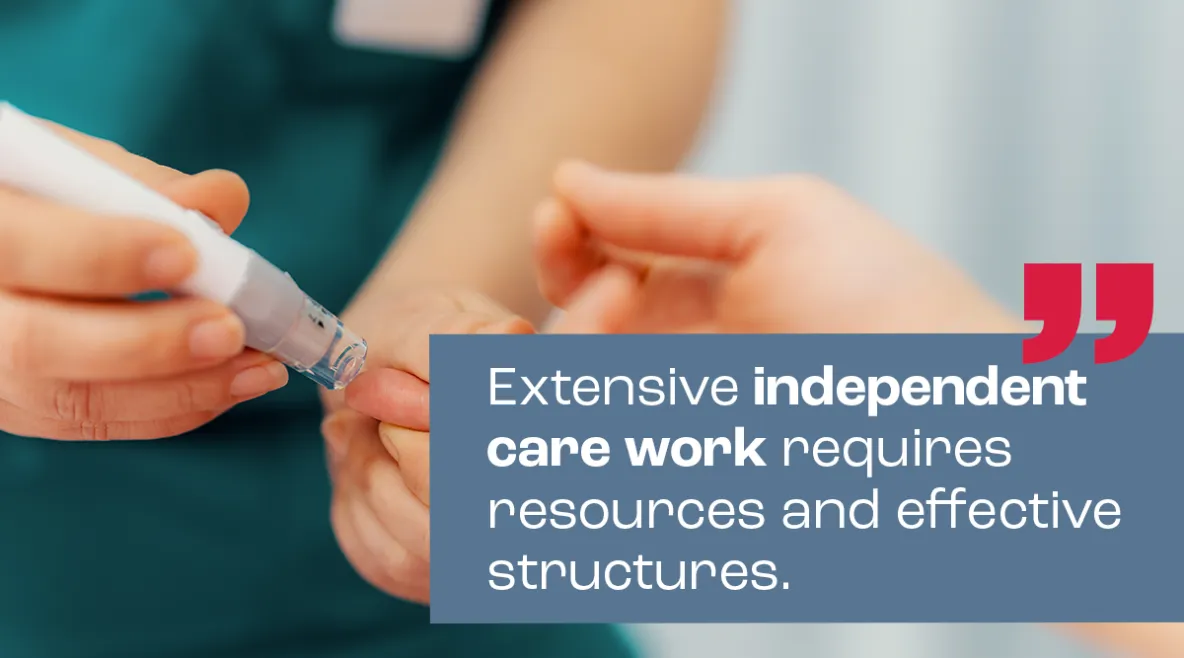
Extensive independent reception work requires resources and effective structures
Based on the survey, nurses’ appointments are effective in joint emergency clinics and in primary care emergency clinics, but in different ways. At primary healthcare emergency clinics, nurses often treat large numbers of patients independently, and reaching a doctor can be challenging. At joint emergency clinics, patients are more acute and multidisciplinary support is often closer, but the work is generally more stressful and requires constant situation assessments.
At the same time, the infrastructure for development has lagged behind. Pay, educational paths, models for the division of labour and consultancy structures do not reflect the current demands of the job. This creates a contradiction whereby the system is dependent on the skills of carers but does not support their sustainable development.
All in all, the nurses’ experiences convey the same message: their responsibilities are increasing, but the systems are not keeping pace. The following comments capture everyday life well:
“Our responsibilities have increased, but the level of support varies too much.”
“Sometimes you have to make decisions on your own when you need a quick consultation.”
In conclusion, it must be noted that for independent nurse practices to function effectively as part of the healthcare system, they require clear structures, sufficient resources, further training and remuneration that is commensurate with the demands of the work. Without sufficient structural resources, increasing the workload of nurses is not sustainable and, in the long term, may jeopardise both staff wellbeing and the functioning of the care system.
What should be done?
The role of independent nurses’ appointments in the functioning of healthcare is undeniable. That is why the operations need to be developed systematically.
Based on the survey, the recommendations for improvement can be summarised in six points:
- Clear roles and responsibilities The expanded responsibilities and independent decision-making powers of nurses should be formalised. We need standardised operating procedures and an effective consultation framework.
- Involve management in day-to-day operations Management must have a clear view of the actual workload in the workplace so that decision-making is based on an understanding of day-to-day operations.
- Improve working conditions Adequate staffing levels, smooth multidisciplinary cooperation and readily available doctor’s consultations are essential.
- Pay commensurate with the level of responsibility Remuneration should reflect the increased level of the skills, responsibilities and independent work tasks of the nurses.
- Patient numbers must be taken into account The increasing number of visits must be taken into account in the planning and division of labour to keep the load under control and maintain patient safety.
- Continuous professional development Nurses require regular training to support clinical decision-making, pharmaceutical treatment, triage and dealing with challenging customer groups.
An independent nursing practice must not be based on nurses having to work ever longer hours. As responsibilities increase, roles, support, working conditions, training and pay must also reflect the demands of the duties.
Learn more about the survey
Independent nurses’ appointments at joint emergency clinics and primary care emergency clinics
The survey by Kirsi Coco, Tehy’s education policy expert, describes the job descriptions of Tehy nurses and the current status of independent nursing practices at joint emergency departments and primary care emergency clinics. The data collected for the survey is extensive, and it brings together the experiences of almost five hundred nurses and dozens of representatives from across the country. The report is part of Tehy Publication Series B.